
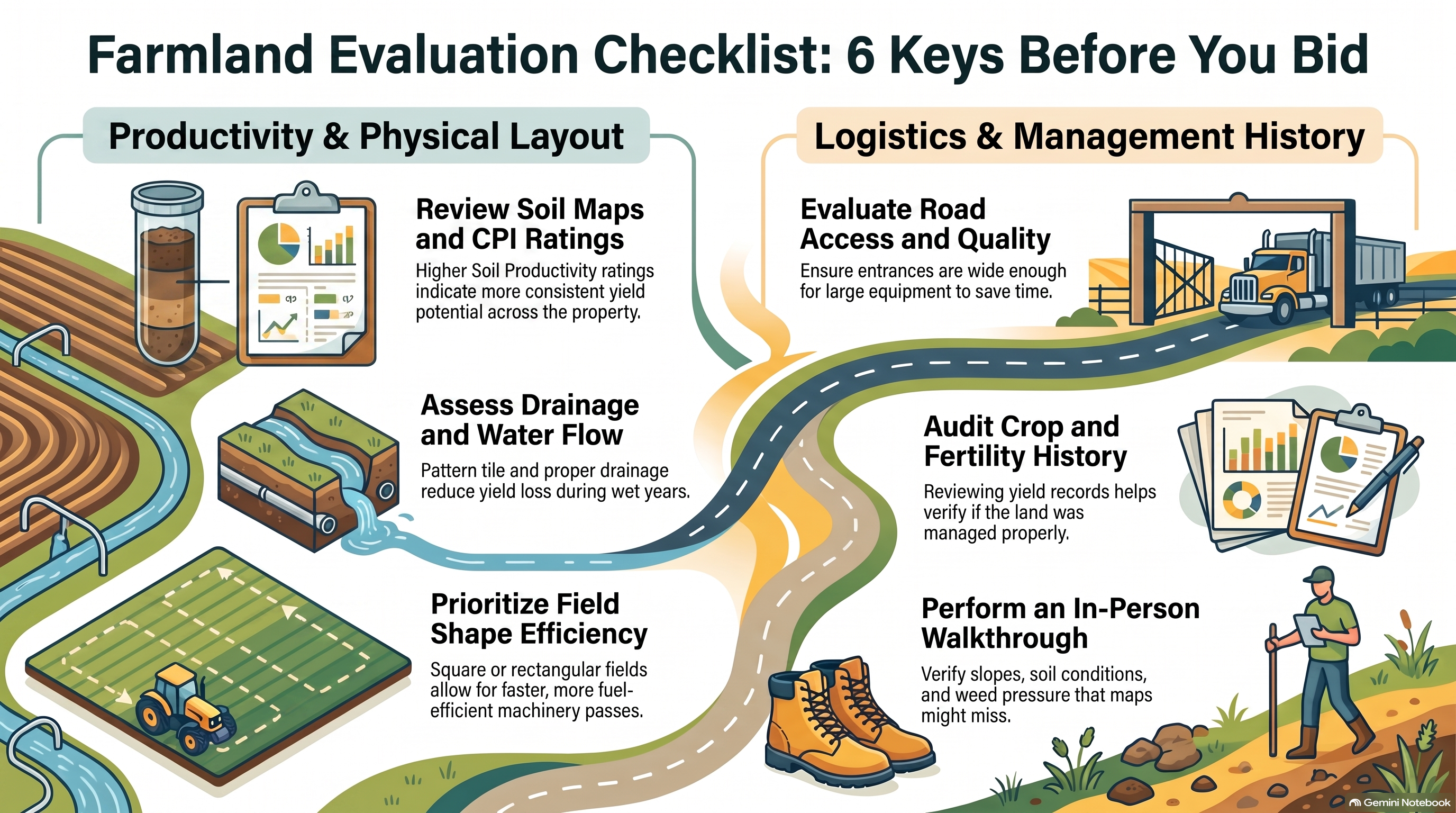
How to Evaluate Farmland Before Bidding at Auction
Buying farmland in Minnesota or South Dakota is a major investment, and taking time to evaluate the property before bidding can protect your long-term financial interests. Understanding soil quality, drainage, access, and field layout helps you make an informed decision.
Review Soil Maps and CPI Ratings
Start by reviewing soil maps. Most auction listings include detailed soil breakdowns with CPI or soil productivity ratings. Higher CPI soils usually offer more consistent yields. Compare soil types across the entire property, not just the average. Variation in soil quality can affect planting decisions, fertilizer needs, and drainage.
Check Drainage and Water Flow
Drainage is another key factor. Fields with standing water, natural depressions, or shallow slopes may require improvements. Ask whether the farm has pattern tile, surface drainage, or recent upgrades. Good drainage increases productivity and reduces yield loss during wet years.
Evaluate Access and Road Quality
Access matters as well. Look for well-maintained field entrances, wide approaches, and good road access for equipment. Poor access adds time and cost during planting and harvest.
Consider Field Shape and Efficiency
Consider crop history and fertility. Some listings include yield records or fertilizer application details. These help identify whether the ground has been managed properly.
Finally, walk the land if possible. Photos and maps are helpful, but an in-person visit allows you to see soil conditions, slopes, and weed pressure for yourself.
With a clear understanding of the land’s strengths and limitations, you can bid confidently and make an informed investment. Check out our current farmland auctions for detailed maps and more information.